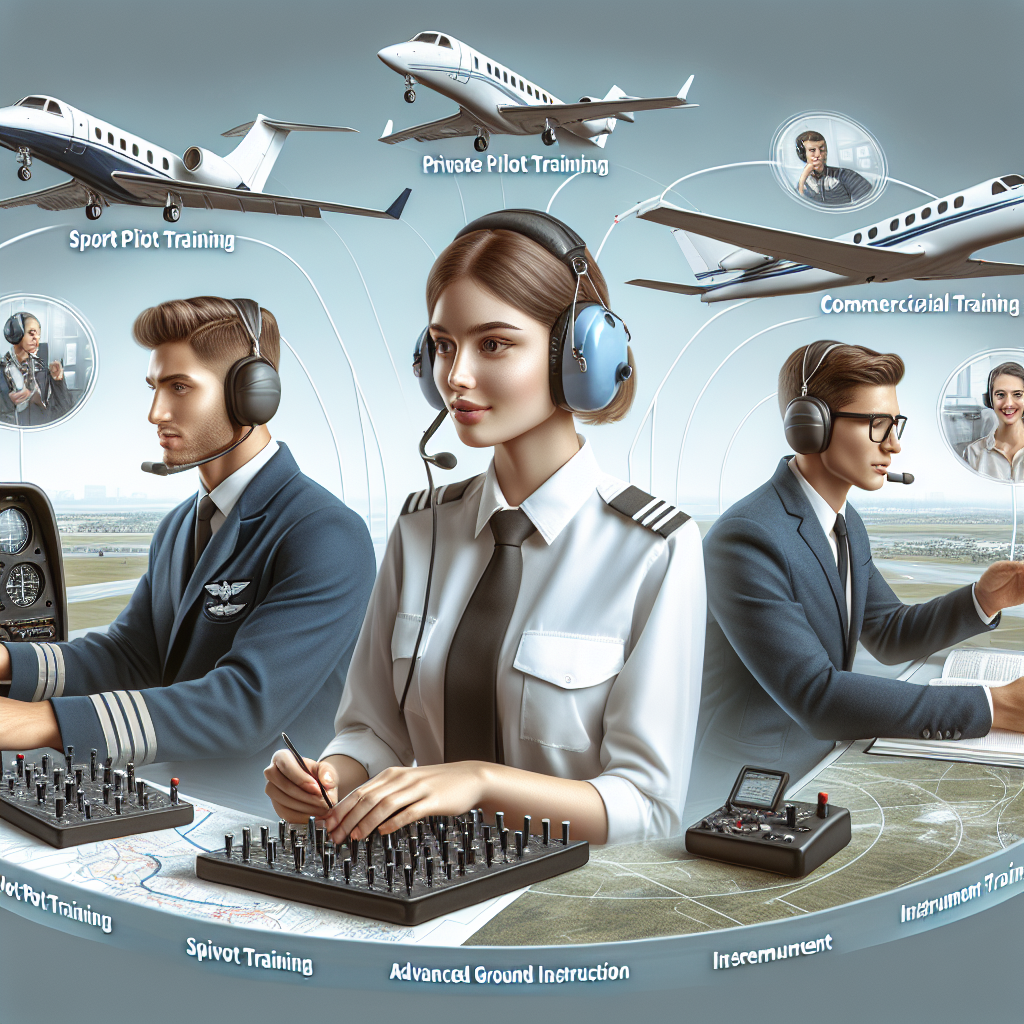
Understanding the Foundations of Aviation Education
Aviation education serves as the cornerstone for aspiring pilots and aviation professionals. Whether you’re beginning your journey with sport pilot training or aiming to achieve commercial pilot certification, a solid educational foundation is essential for success. This education encompasses both theoretical knowledge and practical skills, ensuring that students are well-prepared for the challenges of flying in various environments.
Flight training programs combine classroom instruction with hands-on experience, allowing students to apply principles learned in ground school to real-world scenarios. The integration of advanced and instrument ground instruction prepares pilots for the complexities of modern aviation, including navigation, weather interpretation, and aircraft systems management.
Sport Pilot Training: The Gateway to Aviation
For those new to aviation or seeking a more recreational flying experience, sport pilot training offers an accessible entry point. This level of training is designed for light-sport aircraft and provides foundational flight skills without the extensive requirements of private pilot certification.
During sport pilot training, students learn essential maneuvers, safety procedures, and basic navigation techniques. This program emphasizes practical experience, allowing students to build confidence and proficiency in the cockpit. Sport pilot certification is ideal for individuals looking to fly for fun, with fewer regulatory hurdles and reduced training time compared to higher certifications.
Advancing with Private Pilot Training
Private pilot training is the next step for those who want to expand their flying capabilities beyond sport aviation. This training covers a broader range of aircraft and includes more comprehensive instruction in flight operations, aerodynamics, and airspace rules.
Students undertaking private pilot training benefit from structured flight training combined with advanced and instrument ground instruction. This combination ensures pilots are well-equipped to handle varied flight conditions and prepares them for the responsibilities of piloting single-engine aircraft safely and efficiently.
Mastering the Skies with Commercial Pilot Training
Commercial pilot training is essential for those pursuing a professional career in aviation. This rigorous program develops advanced flying skills, including complex aircraft operation, emergency procedures, and effective decision-making under pressure.
Central to commercial pilot training is instrument training, which teaches pilots to fly solely by reference to instruments, a critical skill for operating in low-visibility and challenging weather conditions. Comprehensive ground instruction supports this training by deepening knowledge of navigation, meteorology, and FAA regulations.
The Importance of Instrument Training and Advanced Ground Instruction
Instrument training is a vital component of all pilot certifications beyond sport level. It enables pilots to maintain control and navigate aircraft safely when visual cues are limited or unavailable. This training requires mastery of cockpit instruments, communication procedures, and situational awareness.
Advanced and instrument ground instruction complements flight training by providing theoretical knowledge essential for understanding complex aeronautical concepts. Together, these educational elements ensure pilots are prepared for the demands of modern aviation and can operate confidently in diverse environments.
Conclusion: Your Pathway to Aviation Excellence
Embarking on a journey through aviation education and flight training opens doors to exciting opportunities in the skies. Whether starting with sport pilot training or aiming for a commercial pilot career, each stage builds crucial skills and knowledge.
By committing to comprehensive instruction that includes advanced and instrument ground education, aspiring pilots can soar to new heights with confidence and