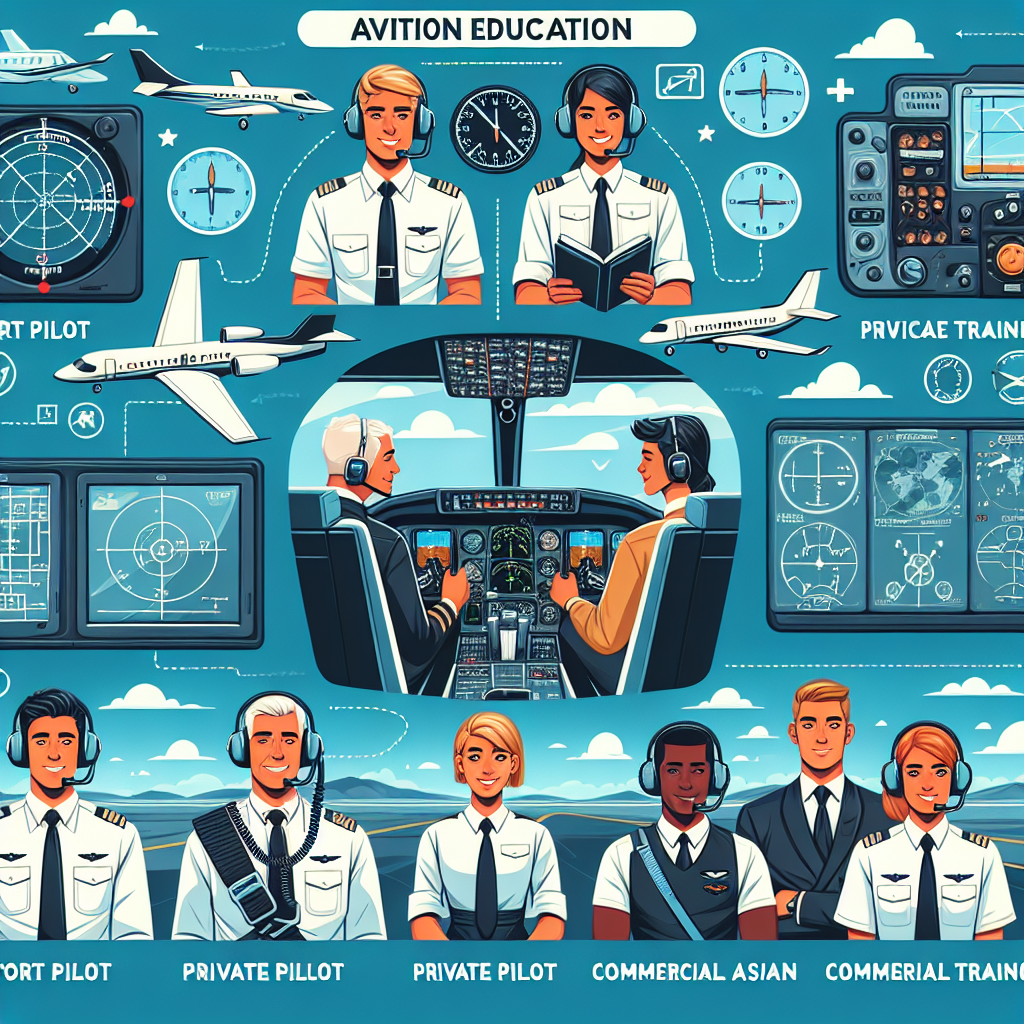
Understanding the Foundations of Aviation Education
Aviation education serves as the cornerstone for aspiring pilots who wish to navigate the skies safely and confidently. From initial exposure to flight principles to mastering complex navigational skills, a structured education path ensures comprehensive knowledge and practical proficiency.
Embarking on flight training involves both theoretical learning and hands-on experience. Ground instruction complements in-flight training by deepening understanding of aerodynamics, meteorology, and regulations, essential for all levels of pilot certification.
Sport Pilot Training: Your First Step in Flight
Sport pilot training offers an accessible entry point for individuals eager to experience flying with fewer prerequisites and less time commitment compared to traditional licenses. This pathway emphasizes basic flight maneuvers and safety protocols tailored for light-sport aircraft.
Through sport pilot training, students gain fundamental skills, including aircraft control, navigation, and communication. This stage builds confidence and lays the groundwork for advancing to more complex pilot certifications.
Advancing to Private Pilot Training
Private pilot training expands upon foundational skills, introducing more comprehensive flight techniques and regulations. This certification allows pilots to carry passengers and fly under a wider range of conditions, increasing both responsibility and opportunity.
Ground instruction during private pilot training covers advanced aerodynamics, flight planning, and emergency procedures, preparing students for real-world flying challenges. Proficiency in these areas is critical for safe and efficient piloting.
Commercial Pilot Training: Elevating Your Career
Commercial pilot training is designed for those pursuing aviation as a profession. This phase demands higher standards of precision, knowledge, and flight time, focusing on complex aircraft and diverse flight operations.
Students in commercial pilot training receive in-depth instruction on performance planning, advanced maneuvers, and regulatory compliance. Mastery in these areas is essential for securing commercial pilot licenses and employment opportunities.
Mastering the Skies with Instrument Training
Instrument training equips pilots with the skills to fly safely in reduced visibility and challenging weather conditions by relying on cockpit instruments rather than visual cues. This capability is vital for enhancing flight safety and operational flexibility.
Advanced and instrument ground instruction emphasizes navigation systems, instrument approaches, and flight rules under instrument flight conditions. Pilots trained in this discipline can confidently undertake complex flight missions in diverse environments.
Integrating Ground Instruction with Practical Flight Experience
Ground instruction complements flight training at every stage, offering theoretical knowledge that supports practical skills. Topics such as airspace regulations, weather analysis, and human factors are critical components of a well-rounded aviation education.
Combining advanced and instrument ground instruction with in-flight practice ensures pilots develop a holistic understanding necessary for safe and effective aviation operations across all certification levels.
Conclusion: Navigating Your Aviation Education Journey
From sport pilot training through private, commercial, and instrument mastery, a structured aviation education provides a comprehensive pathway to achieving your piloting goals. Each stage builds on the last, integrating flight training with ground instruction to prepare competent, confident pilots.
By embracing each phase with dedication and a commitment to learning, aspiring aviators can